Choosing the right High Voltage Power Supply requires more than comparing prices or output ratings. This guide examines ten power supplies currently considered for sale, focusing on performance, safety, reliability, and practical value. Each option deserves careful review.
Voltage range matters. So does current stability. Output ripple, regulation, cooling, connectors, and control interfaces can affect daily operation. A compact laboratory unit may suit testing, while an industrial model may need stronger insulation and continuous-duty construction. These differences are easy to overlook.
Our evaluation draws on manufacturer specifications, technical documentation, and common laboratory purchasing practices. We consider whether each product clearly states its operating limits, protection features, warranty coverage, and compliance information. Safety comes first. High-voltage equipment should be installed and operated only by trained personnel, following applicable standards and the manufacturer’s instructions.
Real-world details also matter. A supply that fits neatly beside an instrument saves bench space. A readable display helps during long testing sessions. Responsive controls can prevent frustrating adjustments. Still, no comparison is perfect. Availability, regional certification, and product revisions may change over time. Buyers should verify current specifications before ordering.
This overview is designed for engineers, researchers, educators, and qualified technicians seeking dependable equipment for lawful applications. It does not replace a formal risk assessment or professional electrical advice. The best choice balances technical requirements, operating conditions, support quality, and total ownership cost—not an impressive number on a product page.
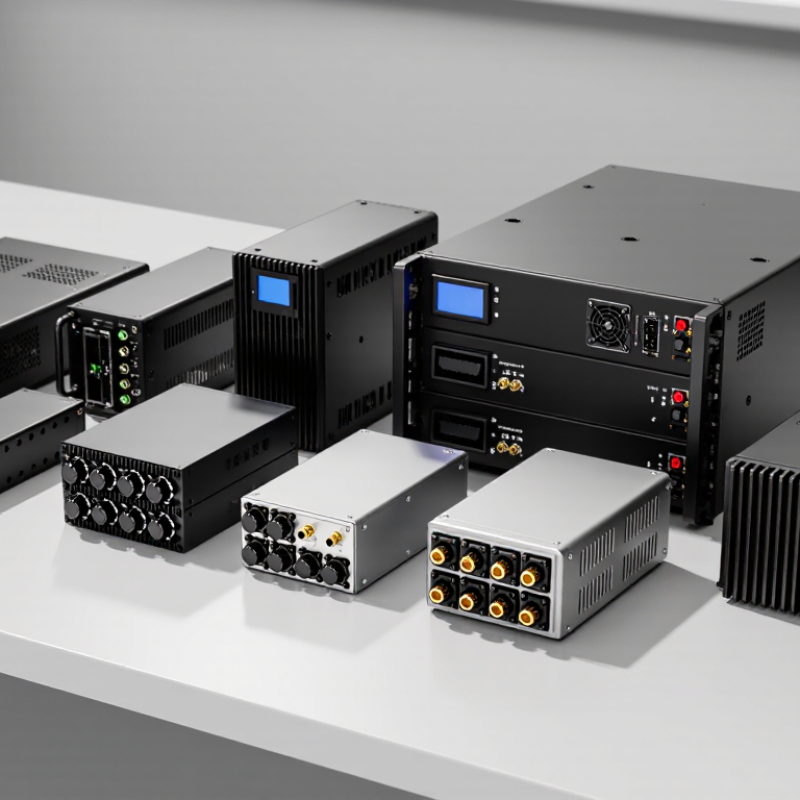
What Is a High-Voltage Power Supply and How Does It Work?
A high-voltage power supply converts ordinary input electricity into controlled, elevated voltage. The process usually begins with rectification, which changes AC into DC. A switching circuit then raises the frequency before a transformer increases the voltage. Finally, filtering and feedback circuits stabilize the output. Think of it as a controlled pressure system for electrons. Small errors matter.
On a test bench, output stability often matters more than maximum voltage. A supply rated at 10 kV may still perform poorly if its ripple, load regulation, or response time is unsuitable. Current limiting is essential. So is insulation. The enclosure, connectors, cables, and cooling system must match the operating voltage.
According to Grand View Research, the broader global power supply market was valued at more than 30 billion dollars in 2023, with continued growth expected through 2030. The International Energy Agency’s Electricity 2024 report also projects strong electricity-demand growth from data centers and industrial equipment. These trends increase demand for efficient conversion systems, including high-voltage units. When comparing high-voltage power supplies for sale, examine voltage range, output current, ripple, efficiency, protection functions, and calibration records. A lower price can hide expensive limitations. Even experienced buyers sometimes underestimate heat, cable losses, or stored charge after shutdown. That deserves careful review.
When comparing high-voltage power supplies for sale, start with usable output, not the advertised maximum. Check voltage range, current limit, power rating, and regulation under load. A 30 kV supply may deliver only a few milliamps, while a lower-voltage model can provide greater continuous power. A 2024 industry market analysis reported continued demand for programmable supplies in testing, medical research, and semiconductor production. That demand makes specification details more important than price alone.
Ripple and stability affect measurement quality. Look for ripple expressed in peak-to-peak volts or percentage of output voltage. A 0.1% ripple specification can be significant at 20 kV, where it represents roughly 20 volts. Response time also matters during load changes. Arc detection, current limiting, and controlled shutdown can protect connected equipment. IEC 61010-1 remains a key safety reference for laboratory electrical equipment, including insulation, spacing, and abnormal-operation testing. Ask for test conditions, because numbers without bandwidth or load information are easy to misunderstand.
Efficiency reduces cabinet heat. However, a high efficiency figure may not include cooling fans or standby consumption. Interfaces such as USB, Ethernet, or analog control support automated testing, but software reliability needs practical verification. I would request calibration data, uncertainty information, and a documented aging rate. That step is often skipped. It should not be. The best comparison sheet includes output accuracy, drift, ripple bandwidth, protection behavior, cooling method, operating temperature, and service support. A quiet supply is useful, but predictable behavior matters more.
Representative supply classes are compared by maximum output voltage and maximum output current. Higher voltage is useful for insulation testing and electrostatic applications, while higher current is important for loads that require greater power. Always verify regulation, ripple, polarity, safety interlocks, and duty-cycle ratings in the manufacturer’s datasheet.
Ten High-Voltage Power Supplies Worth Considering for Sale
Choosing a high-voltage power supply requires more than checking maximum voltage. Ten practical options are benchtop DC supplies, programmable DC units, modular rack supplies, compact laboratory converters, electrostatic supplies, capacitor-charging supplies, high-voltage AC sources, pulsed supplies, photomultiplier supplies, and dielectric-test supplies. Each type serves a different workload.
A benchtop DC model suits controlled laboratory experiments and prototype testing. Programmable units offer remote control, voltage ramping, and current limits. Rack systems help production teams maintain repeatable settings across several channels. Compact converters save space, but their cooling capacity may be limited. Electrostatic supplies support coating and material research. Capacitor-charging models need careful attention to stored energy. High-voltage AC sources are useful for insulation studies and controlled equipment testing.
Pulsed supplies can produce fast, narrow energy bursts, though waveform accuracy deserves close inspection. Photomultiplier supplies need stable, low-noise output for sensitive measurement systems. Dielectric-test supplies should include clear interlocks, discharge controls, and visible status indicators. Look for insulated terminals, overcurrent protection, emergency shutdown access, and documented calibration results. Safety matters more than a low sale price. Only trained users should operate these systems, with appropriate enclosures and grounding.
I would not trust a specification sheet alone. Cable quality, fan noise, ripple, and service support can change daily usability. One overlooked detail can delay an entire experiment. A careful buyer should request test data and confirm local electrical requirements before purchasing.
Choosing among the 10 best high voltage power supplies for sale requires more than comparing output ratings. “High voltage” has different legal meanings across jurisdictions, so engineers should verify local definitions before purchase. IEC 61010-1 addresses measurement, control, and laboratory equipment safety. IEC 60664-1 guides insulation coordination and clearance design. OSHA 29 CFR 1910.333 also requires de-energizing exposed circuits whenever practical. In commissioning work, I check grounding, interlocks, enclosure access, and discharge time before applying power. A good datasheet is not enough.
Tips: Use a documented risk assessment. Confirm the supply’s maximum voltage, stored energy, fault current, and ambient temperature. Install visible disconnects and emergency-stop controls. Maintain clearance from grounded metal, following the manufacturer’s instructions and applicable standards. Test protective earth continuity before energizing. Label every access panel clearly. Small details matter.
The U.S. Bureau of Labor Statistics recorded 145 workplace deaths involving electrical exposure in 2022, showing why installation discipline remains essential. NFPA 70E emphasizes shock and arc-flash risk assessment, boundaries, and properly rated protective equipment. Operators need training, insulated tools, and a verified absence-of-voltage procedure. Yet standards cannot correct poor maintenance. Dust, humidity, loose terminals, and aging insulation can defeat a carefully designed system. I have seen “minor” installation shortcuts create serious uncertainty later. That is the part worth questioning. Safety reviews should continue after commissioning, not end when the equipment starts.
Representative selection guide for common high-voltage DC power-supply configurations; verify the final electrical, thermal, and compliance requirements against the supplier’s current datasheet.
| Selection | Typical Output Range | Typical Output Power | Polarity & Regulation | Suitable Applications | Key Safety Features | Applicable Standards & Codes | Installation Requirements |
|---|---|---|---|---|---|---|---|
| 1. Precision Bench HV Supply | 0–1 kV DC | 50–300 W | Positive or negative output; constant-voltage and constant-current modes; low-ripple laboratory regulation | Component testing, sensors, vacuum experiments, insulation screening, and university laboratories | Interlocked output Key switch, current limit, overvoltage protection, output-discharge circuit, and guarded terminals |
IEC/EN/UL 61010-1; IEC 61010-2-030 where measurement circuits are included; local electrical code | Use a grounded protective-earth outlet; keep exposed conductive parts bonded; provide clear bench space, warning labels, and restricted access |
| 2. Compact 5 kV Supply | 0–5 kV DC | 100–500 W | Single-polarity or reversible-polarity versions; analog or digital voltage/current programming | Photomultiplier tubes, electrostatic charging, ion sources, detector biasing, and research instruments | Remote interlock, arc detection, soft-start, overcurrent shutdown, bleeder resistor, and discharge indicator | IEC/EN/UL 61010-1; IEC 61010-2-030 when applicable; NFPA 70/NEC or local equivalent | Install in a non-condensing, ventilated enclosure; use rated HV cable and connectors; maintain manufacturer-specified creepage and clearance |
| 3. 10 kV Laboratory Supply | 0–10 kV DC | 100–1,000 W | Regulated voltage with adjustable current limit; ripple commonly specified in mV or percentage of rated output | Capacitor charging, electron optics, dielectric testing, and analytical instrumentation | Door interlock, emergency-stop input, overtemperature protection, arc management, grounding monitor, and automatic discharge | IEC/EN/UL 61010-1; IEC 61010-2-030 for test and measurement equipment; IEC 61326-1 for EMC where applicable | Use a lockable test enclosure or guarded test area; connect protective earth before HV; place discharge time and residual-voltage labels at access points |
| 4. 30 kV Modular Supply | 0–30 kV DC | 150–1,500 W | Positive or negative output; remote analog, digital, or fieldbus control; programmable ramp rate | Ion implantation research, electrostatic lenses, X-ray systems, plasma research, and scientific equipment | Redundant interlock loop, controlled ramp-up/ramp-down, overvoltage and arc protection, output monitor, and forced-air cooling | IEC/EN/UL 61010-1; IEC 61010-2-030 where applicable; NFPA 70/NEC; OSHA or applicable occupational-safety rules | Provide a dedicated enclosure, forced ventilation, verified cable termination, equipotential bonding, and a documented lockout/tagout procedure |
| 5. 50 kV High-Stability Supply | 0–50 kV DC | 250–2,500 W | Low-drift regulated output; fixed or programmable polarity; current limiting and voltage-monitor feedback | Electron-beam equipment, mass spectrometry, electrostatic precipitator research, and high-voltage bias applications | Safety-rated access interlock, HV-on lamp, discharge resistor, arc-rate limiting, overtemperature trip, and fault logging | IEC/EN/UL 61010-1; IEC 61010-2-030 where applicable; IEC 60204-1 for machinery-integrated installations; local code | Use a fully enclosed HV section; calculate air clearances for the installation environment; route HV and signal wiring separately and bond all enclosure panels |
| 6. 100 kV Industrial Supply | 0–100 kV DC | 500 W–5 kW | Single or dual polarity; regulated voltage/current; programmable output ramp and fault recovery | Industrial ionization, electrostatic coating, X-ray generation, research accelerators, and insulation systems | Multiple interlocks, emergency stop, grounding verification, arc suppression, stored-energy discharge, and access-door monitoring | IEC/EN/UL 61010-1; IEC 60204-1 for machinery; NFPA 70/NEC or local electrical code; ISO 12100 for machinery risk assessment | Install inside a keyed and interlocked cabinet or fenced area; use an approved grounding grid; restrict access and post high-voltage hazard signage |
| 7. 150 kV X-Ray or Electron-Optics Supply | 0–150 kV DC | 1–10 kW | Highly regulated high-voltage output; commonly negative polarity; precise current control and ramp programming | X-ray tubes, electron microscopes, electron-beam systems, and specialized imaging equipment | Redundant door interlocks, emergency-off circuit, radiation-system interlock interface, arc protection, thermal monitoring, and discharge indication | IEC/EN/UL 61010-1; IEC 60601-1-3 for applicable diagnostic X-ray systems; applicable national radiation-protection regulations | Require a qualified installation review; provide shielding and radiation controls where applicable; use dedicated cooling, protective earth, and service-access procedures |
| 8. 300 kV Accelerator Supply | 0–300 kV DC | 2–20 kW | Precision regulated output; programmable voltage, current, polarity, ramp, and trip thresholds | Particle accelerators, ion-beam systems, electron guns, and advanced materials research | Redundant safety circuits, mechanical key exchange or trapped-key access, fast fault shutdown, grounding monitor, and residual-energy warning | IEC/EN/UL 61010-1 where within scope; IEC 60204-1 for machinery; NFPA 70/NEC; site-specific radiation and occupational-safety requirements | Use a controlled-access room or interlocked enclosure; complete a formal risk assessment; provide equipotential bonding, remote operation, and approved maintenance isolation |
| 9. 500 kV Test-System Supply | 0–500 kV DC | 5–50 kW | Very-low-ripple regulated output; positive, negative, or bipolar configurations; controlled charging and discharge cycles | High-voltage insulation testing, cable testing, bushings, transformers, and laboratory dielectric research | Interlocked test cage, visible warning beacon, grounding switch, automatic discharge, emergency stop, arc-energy limitation, and remote control | IEC 60060 series for high-voltage test techniques; IEC 61010-1 where applicable; IEEE 510; NFPA 70/NEC and local regulations | Design the test area for required clearance; use a visible and audible warning system; install a deliberate grounding device and document test-area access controls |
| 10. 1 MV Specialized HV System | 0–1,000 kV DC | 10–100 kW | Custom engineered output; regulated voltage/current; controlled energy storage, charging, crowbar, or fast-discharge functions | Power-apparatus testing, accelerator facilities, pulsed-power research, and specialized insulation studies | Engineered safety system, redundant access control, grounding and discharge verification, remote-only operation, fault recording, and emergency energy dump | IEC 60060 series; IEEE 510; IEC 60204-1 for machinery; NFPA 70/NEC; applicable national occupational and radiation-safety rules | Requires site-specific engineering, authority review where required, controlled boundaries, qualified HV personnel, formal switching procedures, and a documented lockout/tagout program |
Important: High-voltage installations must be designed, installed, commissioned, and serviced by qualified personnel. The applicable standard depends on the equipment type, voltage, stored energy, intended use, country, and whether the system is integrated into machinery, medical equipment, or a radiation-producing installation.
10 Best High Voltage Power Supplies for Sale?
Choosing a high-voltage power supply begins with your application, not the advertised maximum voltage. Define the required output voltage, current, polarity, and operating mode. A laboratory detector may need quiet, stable output, while an industrial load may require stronger current handling. Check the load’s startup demand, because it can briefly exceed its normal rating. Leave sensible headroom.
Regulation and ripple matter when measuring small signals or driving sensitive components. Review voltage stability, current limiting, discharge behavior, and response time. Confirm the insulation rating and connector design match your enclosure. The supply should also include clear monitoring, emergency shutdown, and interlock options. In real installations, heat is often underestimated. Measure cabinet temperature after several hours, not only during a short bench test. Certification and documented test results add trust, but paperwork alone does not prove suitability.
Tips: Compare the full datasheet, not just the sale price. Ask about calibration records, warranty support, replacement parts, and technical response times. Inspect cable length and grounding requirements before ordering. Keep a written risk assessment for every installation. I have seen a technically suitable unit fail because its cooling path was blocked. That mistake was preventable. If the application is unusual, request a sample evaluation or independent engineering review before making a large purchase.
It converts ordinary electricity into controlled, elevated voltage. AC usually becomes DC through rectification. A switching circuit raises frequency. Then, a transformer increases voltage. Filtering and feedback stabilize the output. Small errors matter.
Maximum voltage does not guarantee good performance. Ripple, load regulation, and response time can affect test results. A 10 kV unit may perform poorly under an unsuitable load. Quiet output matters for sensitive measurements.
A benchtop DC supply suits controlled experiments and prototype testing. Programmable units add remote control, voltage ramping, and current limits. Compact converters save bench space. Their cooling capacity may be limited. That detail is easy to miss.
Rack systems help production teams maintain repeatable settings. They can support several channels in one cabinet. Check cabinet temperature after several operating hours. Blocked airflow can turn a suitable system into a failure.
Pulsed supplies create fast, narrow energy bursts. Inspect waveform accuracy carefully. Capacitor-charging supplies require attention to stored energy. Discharge controls and visible status indicators are important. The energy remains after shutdown.
Compare voltage range, output current, polarity, ripple, efficiency, and response time. Review current limiting and discharge behavior. Check insulation ratings, connector design, cable length, and grounding requirements. Calibration records and test data provide useful evidence. Price alone is weak evidence.
Begin with the actual load, not the advertised maximum voltage. Define voltage, current, polarity, and operating mode. Check startup demand because it may briefly exceed normal current. Leave sensible headroom. Not always enough.
Use suitable enclosures, insulation, grounding, cooling, and emergency shutdown access. Interlocks can reduce access during energized operation. Inspect cables and connectors for voltage compatibility. Only trained users should operate these systems. A specification sheet cannot reveal every installation problem. I would request a sample evaluation for unusual applications.
This guide explains what a High Voltage Power Supply is, how it converts and regulates electrical energy, and why careful control is essential in demanding applications. It reviews the main specifications used for comparison, including output voltage and current, power capacity, voltage stability, ripple, efficiency, response time, insulation, protection features, and control options. It also presents ten types of high-voltage power supplies worth considering for sale, representing different performance levels, form factors, and application needs without focusing on any particular manufacturer.
The article further emphasizes safety standards and installation requirements, such as proper insulation, grounding, enclosure design, ventilation, emergency shutdown systems, warning labels, and trained personnel. Finally, it provides a practical framework for selecting the right unit by matching electrical requirements, load characteristics, operating environment, control interfaces, maintenance needs, budget, and applicable regulations. By evaluating these factors together, readers can choose equipment that delivers reliable performance while supporting safe, compliant, and efficient operation.
