Why Choose a Plug-in Power Supply for Global Sourcing?

Time:2026-10-03 Author:Liam
0%

Global sourcing demands more than a low unit price. A Plug-in Power Supply can simplify procurement when products must serve different markets. Its replaceable input plug supports regional socket formats without redesigning the entire adapter. This flexibility can reduce tooling costs, inventory pressure, and launch delays.

Experienced sourcing teams examine electrical performance before comparing quotations. They review input voltage ranges, output stability, efficiency, connector dimensions, cable length, and operating temperature. A sample should run under realistic loads, not only during a short factory demonstration. Inspectors can check insulation, labeling, packaging, and visible assembly quality. Small details matter. A loose connector can create expensive returns.

Reliable suppliers provide traceable test records and clear production controls. They should explain their quality system, component sources, warranty terms, and corrective-action process. Buyers must also confirm market-specific requirements with qualified compliance professionals. Certifications, plug configurations, markings, and documentation may differ across regions. Meeting one market’s expectations does not guarantee acceptance elsewhere.

No sourcing plan is perfect. Freight disruptions, component substitutions, and forecast errors can still affect delivery. A careful buyer therefore keeps approved alternatives and reviews risks before placing volume orders. The best decision balances safety, consistency, landed cost, and long-term support. When evaluated through samples, audits, and documented testing, a Plug-in Power Supply becomes more than a convenient accessory. It becomes a practical sourcing choice for controlled global growth.
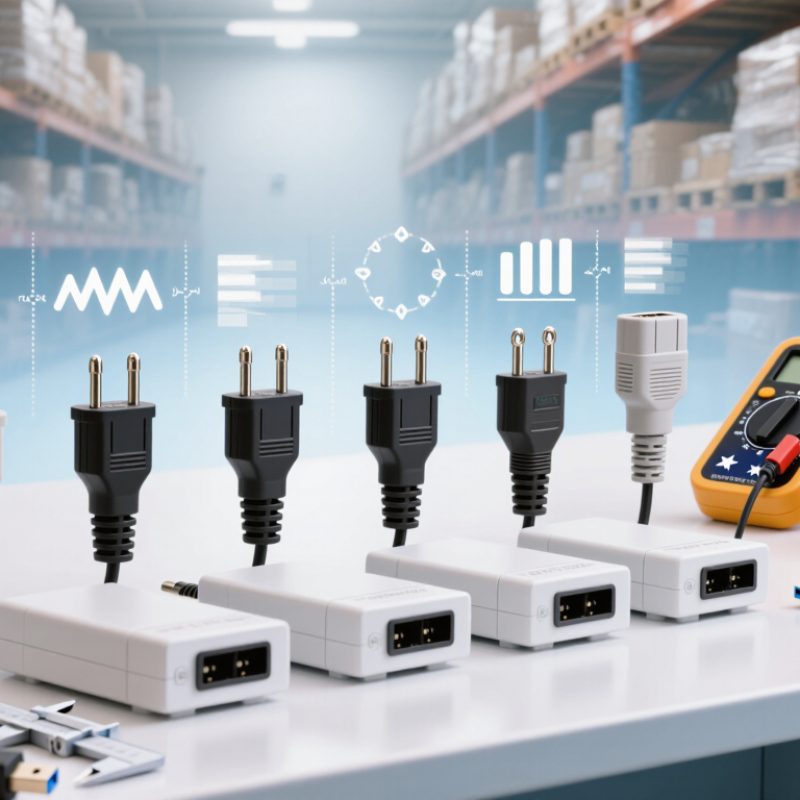
Why Choose a Plug-in Power Supply for Global Sourcing?

What Is a Plug-in Power Supply? IEC 62368-1 Safety Framework

Why Choose a Plug-in Power Supply for Global Sourcing?

A plug-in power supply connects directly to a wall outlet and delivers controlled power to electronic equipment. It usually includes an enclosure, transformer or switching circuit, cable, and interchangeable input plugs. This design can simplify product assembly and support different regional outlet systems. However, a familiar shape does not guarantee safe performance.

IEC 62368-1 uses a hazard-based safety framework for audio, video, information, and communication technology equipment. It evaluates electrical energy, fire risks, mechanical hazards, insulation, temperature, and accessible parts. A compliant design should manage risks through protective barriers, suitable creepage distances, reinforced insulation, and reliable construction. Testing may include abnormal operation, overload, drop impact, and temperature checks. These details matter during global sourcing. Documents should match the actual production model, not an early sample. That mistake happens.

Tips: Ask for current test reports, input and output ratings, plug configurations, and production traceability. Check whether the power supply suits the final device, cable length, and operating environment. Confirm regional requirements separately, because IEC 62368-1 is a safety framework, not a complete market approval. Inspect the enclosure for cracks, loose pins, sharp edges, or excessive heat after extended use. Small checks reveal large problems. Allow time for retesting when components change. Even a minor insulation change can affect the safety assessment.

Why Choose a Plug-in Power Supply for Global Sourcing?

Common nominal single-phase supply voltages in major global markets

A plug-in power supply can simplify global sourcing when its input range and safety design support the target markets. The chart shows commonly specified nominal supply voltages; actual product designs should also account for frequency, plug configuration, tolerances, and certification requirements.

IEC 62368-1 uses a hazard-based safety framework for audio/video, information and communication technology equipment. It focuses on identifying energy sources, classifying their potential to cause injury, and applying suitable safeguards. Nominal voltage references are based on commonly used national supply systems and IEC 60038 values.

How Does 100–240 V, 50/60 Hz Input Enable Global Sourcing?

A 100–240 V, 50/60 Hz input lets one plug-in power supply serve many electrical markets. The design accepts common household voltage ranges across Europe, Asia, North America, and other regions. It also supports both major utility frequencies. This reduces redesign work during supplier qualification and simplifies inventory planning.

4% annual global electricity demand growth forecast from 2024 to 2026

The International Energy Agency’s Electricity 2024 report forecasts global electricity demand growth of about 4% annually from 2024 to 2026. For sourcing teams, flexible power compatibility becomes more valuable as production and distribution networks expand.

In practical procurement, buyers can test the same supply on a 230 V, 50 Hz bench and a 120 V, 60 Hz bench. Output stability, temperature rise, startup behavior, and standby consumption still require verification. A wide input range does not remove plug-shape differences, local approval marks, or documentation requirements. That point is often underestimated.

UNCTAD reports that more than 80% of global merchandise trade by volume moves by sea, so compact, standardized power supplies can reduce shipment complexity across long routes. However, “universal” should not mean “approved everywhere.” Regional testing, traceable specifications, and clear installation instructions remain necessary. A minor weakness is unavoidable: wider input capability may increase circuit complexity, and poor design can reduce efficiency. Engineers should compare measured performance, not rely only on the voltage label.

Which Efficiency Rules Apply? DOE Level VI and EU CoC Tier 2

When sourcing plug-in power supplies globally, efficiency rules deserve attention before price negotiations. DOE Level VI applies to many external power supplies sold in the United States. It evaluates average active-mode efficiency and no-load power consumption. A compact adapter drawing power while unused can fail the second test. That detail matters in warehouses, hotels, and homes with many connected devices.

EU Code of Conduct Tier 2 is a voluntary efficiency benchmark, but buyers often treat it as a serious market signal. Its targets can push suppliers beyond basic legal requirements. It is not a substitute for mandatory regional rules. Ask for test reports covering the exact model, output voltage, rated load, and input range. A report for a similar enclosure is not enough. Check 115 V and 230 V results separately when the design supports both. Thermal performance also deserves review, because heat can reduce efficiency and shorten service life.

Global sourcing adds practical friction. Plug shape, mains frequency, standby behavior, and documentation vary by destination. I have seen a specification pass on paper, then miss efficiency targets after component changes. That is an uncomfortable reminder: approval must follow production samples, not only datasheets. Keep traceable records, repeat tests after revisions, and confirm the applicable rule for each sales region. A cheaper unit may become expensive when retesting, relabeling, or redesign is required.

How Do Regional Plugs and Approvals Affect Market Access?

A plug-in power supply can simplify global sourcing, but its regional plug often decides whether a product reaches a shelf. A unit designed for one socket may need an adapter, a different cord set, or a complete redesign. That choice affects safety, packaging, inventory, and user confidence. The plug is never a small detail. It is the first market-access question.

Socket shapes vary, but electrical conditions vary too. A supply must match local voltage, frequency, grounding, and expected load. Engineers also check insulation, leakage current, temperature rise, electromagnetic compatibility, and fire resistance. Approval marks and test reports must fit the destination market, product category, and current rules. A familiar certificate may not replace a required national or regional approval. Ask for traceable reports, model numbers, test standards, and production-control evidence. Missing paperwork can delay imports or force costly relabeling. A rushed review can miss one critical line.

For several regions, interchangeable cord sets can reduce inventory and simplify final assembly. However, connectors must remain secure, correctly rated, and protected from accidental misuse. Labels should show input ratings, output limits, polarity, and responsible-party information where required. Keep a compliance matrix for every destination. Review it with qualified local specialists before shipment. Small revisions matter. A plug change can alter the enclosure, strain relief, and approval scope. Treat these details as engineering requirements, not purchasing options.

How Does USB PD 3.1 Deliver Power Up to 240 W?

A plug-in power supply can simplify global sourcing when one design serves several markets.
Its detachable input cable supports regional plug standards without redesigning the main electronics. That flexibility matters during product launches.

USB Power Delivery 3.1 makes the output more capable. The standard supports up to 240 W through Extended Power Range operation. It can negotiate higher voltage levels, including 28 V, 36 V, and 48 V. At 48 V and 5 A, the maximum reaches 240 W.

The device requests power dynamically, rather than receiving full output automatically.
Safer negotiation.

In practical testing, a 240 W label is not a promise for every cable or device. The power supply, cable, connector, and equipment must all support the required level. Suitable high-power cables usually need electronic identification.

Thermal performance also deserves close attention. A compact enclosure may become uncomfortable under continuous load. I have found that short laboratory tests can hide real installation problems. Long charging sessions reveal heat, voltage drop, and connector quality.

Sourcing teams should verify efficiency, protection features, insulation, and regional compliance documents. Local requirements may differ across markets.

Ask for test reports, not only attractive specifications. That step can slow purchasing, but it reduces unpleasant surprises during certification and field use.

FAQS

What does the US Level VI efficiency rule examine?

It examines average active-mode efficiency and no-load power use. Unused power matters. A small adapter can still consume electricity while disconnected from equipment.

Is the European Tier 2 benchmark legally mandatory everywhere?

No. It is a voluntary efficiency benchmark and a useful market signal. It does not replace mandatory regional rules. Confirm local requirements separately.

What should efficiency test reports include?

Reports should identify the exact model, output voltage, rated load, and input range. Check results at both 115 volts and 230 volts when applicable. A similar enclosure is not enough.

Why should production samples receive approval testing?

Component changes can reduce efficiency after the original review. Datasheets may look perfect. Test samples from actual production. Repeat testing after every meaningful revision.

How do regional plugs affect market access?

Plug shape, voltage, frequency, and grounding differ by destination. A product may need a new cord set or redesigned enclosure. The plug is not a minor detail.

What documents help confirm regional compliance?

Request traceable reports, model numbers, test standards, and production-control evidence. Check insulation, leakage current, temperature rise, electromagnetic compatibility, and fire resistance. Missing paperwork can delay shipment.

Can interchangeable cord sets simplify global sourcing?

Yes, they can reduce inventory and support final assembly near the destination. Connectors must remain secure and correctly rated. Check strain relief after every plug change.

How can a modern power-delivery standard reach 240 watts?

Extended power operation can negotiate voltage levels up to 48 volts and current up to 5 amperes. That combination reaches 240 watts. Full output is not automatic. The device requests the needed power.

Does a 240-watt label guarantee 240 watts in use?

No. The supply, cable, connector, and equipment must support that level. High-power cables may need electronic identification. Long charging sessions reveal heat and voltage drop. Short tests can mislead.

What practical checks should buyers complete before shipment?

Verify efficiency, thermal behavior, protection features, insulation, labels, and regional documents. Check input ratings, output limits, and polarity. A cheaper unit may become costly later. That possibility deserves honest review.

Conclusion

A Plug-in Power Supply is a compact external power unit that connects directly to a wall outlet and converts mains electricity into a stable, safe output for electronic equipment. Its design is commonly evaluated under the IEC 62368-1 safety framework, which focuses on protecting users from electrical, thermal, and energy-related hazards. With an input range of 100–240 V and support for both 50 Hz and 60 Hz systems, one power supply design can serve many regions with fewer modifications, simplifying global sourcing and inventory management.

Energy performance is also essential for international distribution. DOE Level VI and EU CoC Tier 2 requirements encourage efficient operation, including reduced standby power consumption. Regional plug formats, certification requirements, labeling, and approval procedures must be considered before entering each market. For modern high-power applications, USB Power Delivery 3.1 can support power levels of up to 240 W, enabling suitable solutions for advanced devices while maintaining negotiated voltage and current control.

Liam

Liam

Liam is a dedicated marketing professional with a profound expertise in the industry, where he excels at highlighting the unique advantages of our core products. With a keen understanding of market trends and consumer needs, Liam frequently updates our company’s professional blog, providing......